Choosing ceramic coating versus paint protection film is not simply a choice between two brands or two levels of shine. They are different protection systems: one forms a thin, bonded surface layer that changes how contamination and water interact with paint, while the other adds a separate flexible film that absorbs and spreads some impact energy. For a Metro Detroit vehicle owner, the right decision depends on road debris, winter maintenance, parking habits, paint condition, vehicle shape, and which panels are most likely to be damaged.
What ceramic coating and paint protection film actually are
Ceramic coating is a surface treatment applied over properly prepared paint, trim, wheels, or other approved materials. Its chemistry cures into a tightly attached layer that can make the surface more resistant to contamination, easier to wash, and more visually uniform. It does not become a second body panel, and it does not have the thickness or elasticity needed to absorb every stone strike.
Paint protection film is a physical sacrificial layer installed over selected painted panels. The film receives the abrasion, impact, and scuff before the factory finish does. A film system may include a clear top layer, a protective film body, and an adhesive layer. Product construction and installation methods vary, so the installer must match the material to the panel, edge, curve, and intended use. Manufacturer descriptions from 3M’s paint protection film information and XPEL’s product documentation both describe PPF as a film designed for automotive paint protection rather than as a liquid coating.
That distinction explains why a coating can be excellent at reducing wash friction and bonded-contaminant problems while still being a poor substitute for film on a front bumper. Conversely, film can be highly useful against stone chips while doing less to simplify the washing of every uncovered surface.
What each system changes
| Question | Ceramic coating | Paint protection film |
|---|---|---|
| What is installed? | A cured liquid-applied surface layer | A shaped transparent film bonded to paint |
| Primary job | Surface behavior, gloss, and easier maintenance | Physical protection from impact and abrasion |
| Best coverage pattern | Broad coverage across compatible surfaces | Targeted or full-panel coverage where damage risk is high |
| Typical failure mode | Contamination, improper care, or coating wear | Impact marks, lifting edges, cuts, staining, or film aging |
| Can it stop a deep stone chip? | Not reliably; it is not an impact shield | It is specifically intended to reduce damage from many ordinary impacts |
Neither product repairs neglected paint. Swirl marks, oxidation, sanding scratches, water-spot etching, and dealership transport damage remain under the protection unless the surface is corrected first. That is why paint correction and surface preparation come before protection, not after it.
- A new sports car with clean paint may need protection planning before its first winter drive.
- A daily-driven SUV with heavy wash marring may need correction before either system is installed.
- A work truck may justify film on the leading edges and a coating on the remaining painted surfaces.
- A motorcycle, dirt bike, or ATV may need a different coverage map because plastics, graphics, fuel tanks, and frequently touched panels do not behave like a sedan’s hood.
Why the choice matters in Greater Metro Detroit
Protection decisions become clearer when the damage source is identified. Southeast Michigan vehicles encounter highway gravel, construction-zone debris, salt residue, road film, automatic-wash brushes, tunnel-wash chemicals, bird droppings, tree contamination, and repeated freeze-thaw cycles. The vehicle may also sit outdoors at a dealership, in a fleet lot, at a boat launch, or beside a commercial facility where airborne dust settles on the finish.
Impact risk points toward film. The front bumper, hood leading edge, mirror caps, rocker panels, door cups, and lower doors are exposed to different forms of damage. A bumper sees direct impacts and flexible deflection. Door cups see fingernail scratches. Rockers see sand and salt spray. A single “full front” package may protect the bumper, partial hood, partial fenders, and mirrors, but coverage definitions differ and should be confirmed on the vehicle itself.
Maintenance friction points toward coating. A coated surface can make routine washing more manageable because contamination has less opportunity to cling aggressively when the surface is maintained correctly. The advantage is not permission to leave salt, bugs, or bird droppings in place. A coating still needs appropriate washing, drying, inspection, and periodic decontamination.
For a Metro Detroit owner, ask which inconvenience is more expensive in time and attention:
- Repairing visible chips and scuffs on the most exposed panels?
- Washing a large SUV, truck, RV, or bus repeatedly through a dirty season?
- Keeping a high-value sports car presentable between weekend drives?
- Maintaining consistent appearance across dealership inventory or a fleet?
- Protecting a boat, personal watercraft, motorcycle, or powersports vehicle that has mixed painted, plastic, and graphic surfaces?
Vehicle use should determine coverage, not a generic package name. A highway commuter may accumulate more front-end exposure than a low-mileage weekend coupe. A gravel-road contractor may need lower-body film on a truck. A fleet manager may value repeatable cleaning procedures and reduced cosmetic downtime more than maximum gloss. A boat owner may need to distinguish painted topside surfaces from gelcoat and vinyl, because a product approved for automotive clear coat is not automatically approved for every marine material.
For a practical coverage discussion, paint protection film in Tacoma helps a vehicle owner compare paint protection film coverage for a specific vehicle and make a more informed decision about which panels need protection.

How the two systems work at the surface
How a coating changes washing and contamination
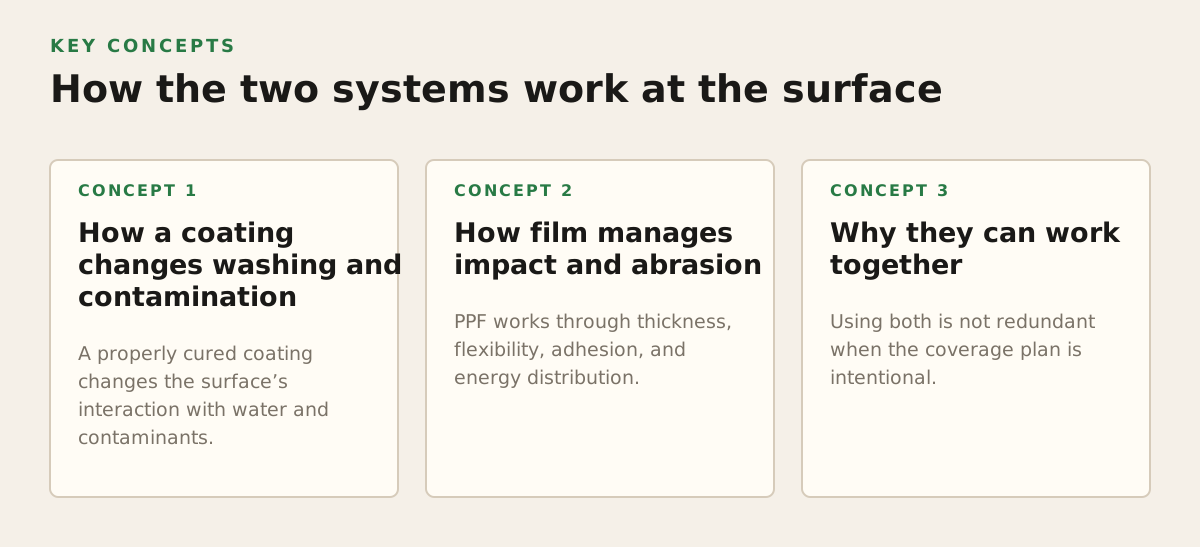
A properly cured coating changes the surface’s interaction with water and contaminants. Water may bead or sheet differently, and some dirt may release more readily during a careful wash. The visible result depends on paint color, lighting, coating formulation, prep quality, cure conditions, and maintenance. Hydrophobic behavior is not the same as impact protection: water behavior can improve while the paint remains vulnerable to a sharp stone.
Coating performance is also tied to the surface beneath it. If oils, polishing residue, mineral deposits, or embedded contamination remain, the coating may bond inconsistently or preserve an uneven appearance. A professional process therefore includes inspection, chemical and mechanical decontamination as appropriate, paint correction when needed, panel preparation, controlled application, and cure guidance.
Some coating makers describe their products as ceramic, quartz, or silica-based systems. Those labels do not make all products interchangeable. The relevant questions are whether the product is approved for the intended surface, what preparation it requires, how it must cure, and what maintenance restrictions apply. For an example of manufacturer-level product information rather than a general marketing promise, Gtechniq’s ceramic coating product pages distinguish coating products and intended applications.
How film manages impact and abrasion
PPF works through thickness, flexibility, adhesion, and energy distribution. When a small object strikes a protected panel, the film can take the initial contact and spread some of the force over a wider area. It may prevent the paint from chipping, though no film can guarantee protection from every impact. A sharp object, extreme impact, poor installation, or damaged film can still expose the paint.
Film protection is local by design. If the hood is covered but the adjacent fender is not, the fender remains the vulnerable boundary. If a rocker is protected only to a certain line, debris can mark the unprotected area below it. Edges, seams, sensors, emblems, vents, body lines, and removable trim all affect the coverage map.
Film also has its own maintenance requirements. Harsh tools can mark the top layer, pressure washing too close to an edge can encourage lifting, and contamination left on the film can stain or become difficult to remove. A film installer should explain how to wash near edges, how to handle lifting, and whether a damaged section should be repaired or replaced.
- Coating mechanism: changes surface chemistry and cleaning behavior.
- Film mechanism: adds a sacrificial physical barrier between the environment and paint.
- Shared requirement: both depend on clean, sound substrate and correct preparation.
- Shared limitation: neither removes the need for safe washing and prompt contamination removal.
Why they can work together
Using both is not redundant when the coverage plan is intentional. Film can be installed on impact zones, while coating can be applied to uncovered painted surfaces and, where approved, to the film itself. The result is a division of labor: film handles impact exposure, while coating supports broader maintenance and appearance goals. Compatibility must be confirmed by the installer and product manufacturer; not every coating is appropriate for every film topcoat, vinyl graphic, matte finish, plastic, or rubber surface.
Where each option breaks down
A good recommendation includes the disappointing scenarios. Ceramic coating is not a force field. It will not reliably prevent rock chips, stop a shopping cart, conceal deep scratches, or restore paint that was already damaged. It can also lose desirable water behavior when the surface is clogged with mineral deposits or traffic film, even if some coating remains bonded below the contamination.
Coating failure is often maintenance-related. Automatic brush washing, aggressive degreasers, abrasive towels, infrequent rinsing, and improper drying can degrade appearance or add new defects. A vehicle owner who wants a coating should be willing to follow a sensible wash process. A fleet manager should decide whether drivers or a centralized wash team can follow that process consistently.
PPF is not invisible under every condition. Edges may be visible at certain angles, dirt can collect around poorly maintained edges, and film can show impact marks even when the paint beneath survives. A panel may eventually need film replacement because of accumulated damage, staining, lifting, or aesthetic aging. Film protects paint by accepting wear; visible wear on the film is evidence that the sacrificial layer has done its job, not proof that it is permanent.
Film also cannot compensate for poor panel condition. Deep chips, rust bubbles, failing clear coat, and loose paint may need repair before installation. Applying film over unstable paint can create removal and adhesion problems later. On repainted panels, the installer should evaluate the quality and cure status of the refinish rather than assume factory-like behavior.
- Do not choose coating alone when the primary fear is repeated stone impact on a highway-driven front end.
- Do not choose film alone when the primary problem is washing a large amount of uncovered painted surface.
- Do not apply either system over oxidation, loose clear coat, or unresolved contamination.
- Do not assume a product for gloss automotive paint belongs on matte paint, textured plastic, gelcoat, vinyl, or graphics.
- Do not treat a warranty or durability statement as a substitute for learning the required maintenance and installation conditions.
Color and finish also matter. A dark vehicle can reveal water spotting and wash marring quickly. Matte or satin finishes have different correction constraints because polishing can alter the sheen. A wrapped vehicle, a motorcycle with graphics, or an RV with painted and molded sections needs a material-by-material plan. The safest recommendation is based on an inspection and a written coverage map rather than on a one-size-fits-all claim.
How practitioners apply the decision
The first step is a damage and maintenance audit. Note where the vehicle is struck, touched, washed, parked, and stored. For a dealership, inspect transport faces, door edges, handles, and lot-wash marks. For a fleet, compare route conditions and cleaning practices across vehicle classes. For a boat or personal watercraft, identify whether the concern is painted automotive-style finish, gelcoat, graphics, or another material. For a motorcycle or ATV, include tank contact, fork guards, fenders, frame-adjacent areas, and removable plastics.
Illustrative coverage examples
The following numbers are illustrative planning examples, not universal benchmarks. Actual coverage should be mapped to the vehicle’s dimensions, styling, use, and available film patterns.
- Daily commuter sedan: film on the front bumper, mirror caps, and vulnerable leading sections; coating on the remaining painted exterior if easier washing is a priority.
- Highway-driven pickup: consider film on the bumper, hood leading area, fender edges, rocker panels, and door cups; use coating elsewhere only after confirming compatibility with bed liners, plastics, and trim.
- Weekend sports car: prioritize a broad impact-zone film plan if chip avoidance matters, then consider coating for uncovered panels and maintenance behavior.
- Motorcycle or dirt bike: protect contact and debris zones selectively; verify whether the candidate product belongs on painted metal, plastics, graphics, or textured components.
- Boat, RV, bus, or commercial vehicle: divide the project by substrate and exposure rather than treating the entire unit as ordinary clear-coated automotive paint.
Preparation is the quality-control stage
Before installation, the practitioner should inspect paint thickness and condition where relevant, identify previous repairs, remove contamination, and establish what defects will and will not be corrected. Preparation determines what gets preserved. Film can lock in visible defects, and coating can make an uneven finish more noticeable by increasing gloss across it.
For coating work, the surface must be free of polishing oils and residue so the product can bond consistently. For film work, the panel must be clean enough for accurate positioning and smooth adhesion. Controlled installation also matters: dust, stretched material, trapped moisture, contaminated edges, and rushed trimming can affect appearance and long-term serviceability.
Make the recommendation from the dominant risk
| Dominant concern | Starting recommendation | Important qualification |
|---|---|---|
| Rock chips and gravel impact | Prioritize PPF on exposed panels | Coverage must include the actual impact zones, not only the hood center |
| Frequent washing and road film | Consider ceramic coating on compatible surfaces | Safe washing remains necessary; hydrophobic behavior is not permanent immunity |
| Both impact and maintenance | Use film selectively and coating on suitable remaining surfaces | Confirm coating-to-film compatibility before combining systems |
| Damaged or neglected paint | Correct or repair the substrate first | Protection should not be used to hide unstable paint or corrosion |
| Mixed-material vehicle | Build a substrate-specific plan | Automotive paint, plastic, vinyl, gelcoat, and graphics may require different products |
For owners comparing the two services in detail, coating can be reviewed as the ceramic-coating option, while ppf is the relevant page for paint protection film. The useful question is not which service sounds stronger; it is which surface needs a sacrificial barrier and which surface needs easier maintenance.
Set maintenance expectations before delivery
A protection project is incomplete if the owner does not know what to do afterward. A practical handoff should cover the following:
- When the vehicle can be washed or exposed to weather after installation.
- Which wash chemicals, towels, mitts, and drying methods are suitable.
- How close a pressure washer may be used around PPF edges.
- How to remove bugs, bird deposits, tree residue, and salt without aggressive scrubbing.
- What changes indicate a service issue, such as lifting, edge contamination, staining, or unusual water behavior.
- Which maintenance visits, inspections, or decontamination steps are recommended for the chosen system.
For dealerships and fleet operators, turn those instructions into a repeatable checklist. A coating cannot solve a wash process that repeatedly drags grit across paint, and film cannot solve a pressure-washing practice that attacks its edges. Consistency across drivers, detailers, and lot attendants is part of the protection strategy.
For most Metro Detroit vehicles, the defensible recommendation is risk-based: choose film where chips, abrasion, and contact are the expensive problems; choose coating where broad-surface cleaning and appearance maintenance are the larger burden; and combine them when both risks justify separate solutions. Rite-Way Auto Reconditioning can help map that decision across cars, trucks, motorcycles, boats, RVs, buses, and commercial vehicles through Rite-Way Auto Reconditioning.