What is paint correction before ceramic coating? It is the controlled polishing of a vehicle’s paint to reduce visible defects, such as swirl marks, light scratches, and oxidation, before a protective coating is applied. The goal is a cleaner, more even-looking surface, not to make every mark disappear. Correction matters because a clear coating protects the finish as prepared; it does not replace paint repair or hide every flaw.
What paint correction means in this context
Paint correction is a process of refining the painted surface with polishing products and tools. Depending on the paint and the defects, that may mean a relatively light polishing step or a more involved sequence using different levels of abrasive. It is different from washing, which removes surface dirt, and from repainting, which adds new paint to repair damage that polishing cannot resolve.
On a car, truck, or motorcycle, the visible finish is typically a paint system with a clear layer on top. Polishing works at the surface of that finish to improve its appearance. Compounds and polishes are designed for different levels of defect removal and refinement; for example, Meguiar’s describes its Ultimate Compound as a product for addressing defects such as oxidation and scratches, while its Ultimate Polish is positioned as a finishing polish.
Before applying a ceramic coating, correction is therefore a paint-preparation choice, not an automatic promise of a perfect finish. A nearly new vehicle with little visible marring may need only cleaning and a modest polish, if any. A darker vehicle with obvious wash marks may benefit from more correction. The right scope depends on what is actually present and what improvement is reasonable to pursue.
Why correct paint before applying a coating
A coating is not a paint-leveling product. If swirls, haze, or scratches are visible before application, it is safer to assume they will remain visible afterward unless they are corrected first. A glossy, transparent protective layer can leave the existing finish visible; it should not be treated as a cover-up for defects. Coating makers also specify surface preparation in their application guidance. For example, Gtechniq’s Crystal Serum Light instructions include preparing the paint before application, and Gyeon describes Q²M Prep as a way to remove polishing residues ahead of coating.
That makes the prep decision especially relevant when a vehicle will receive close inspection or regular use. A fleet truck with a few ordinary marks may not need the same finish refinement as a sports car whose owner is focused on paint appearance. A boat, RV, or motorcycle has different painted panels and use conditions, but the same basic question applies: which visible defects are worth addressing before protection?
- Appearance: correction can reduce the look of wash-induced swirls and dullness, making the finish appear more even.
- Protection planning: the coating is applied after the paint has been prepared, rather than being expected to remove defects itself.
- Realistic expectations: deciding which marks to leave can help avoid pursuing an aggressive correction where a safer, more modest improvement is preferable.
Correction is not required simply because the word “ceramic” is in the service name. The vehicle’s condition and the owner’s priorities should determine whether polishing is appropriate and how much work to consider. If the finish already looks good in direct light, ask whether a light refinement step is justified rather than assuming a multi-step correction is necessary.
How correction is assessed and carried out
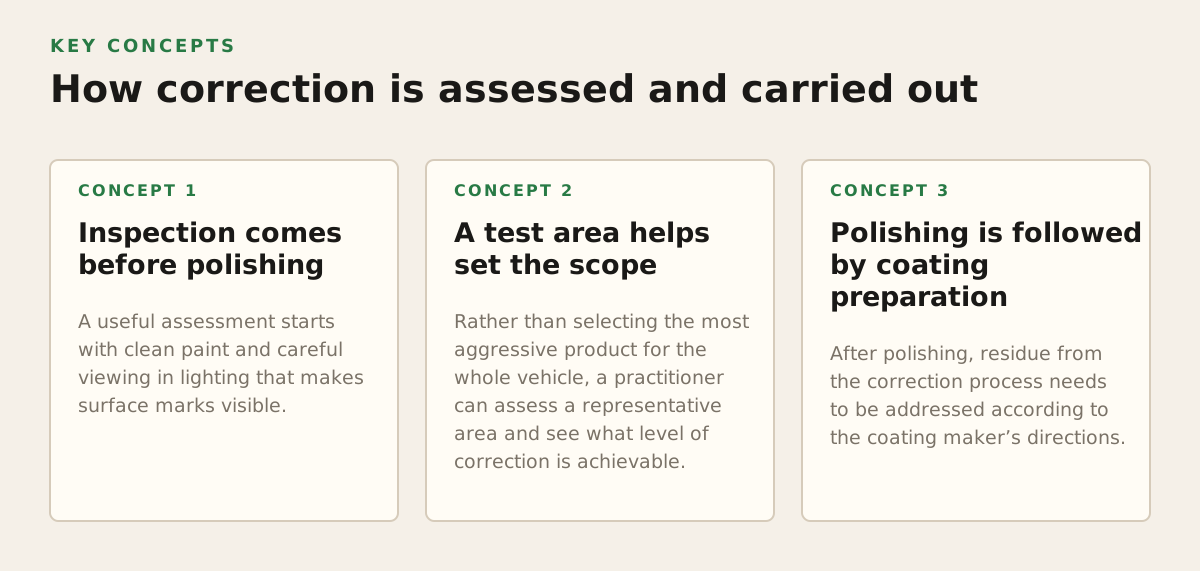
Inspection comes before polishing
A useful assessment starts with clean paint and careful viewing in lighting that makes surface marks visible. The inspection should separate removable surface contamination from defects that are in the finish. A mark that looks like a scratch may be dirt or residue on top; a scratch that catches the eye, or a defect that has broken through the clear layer, may need a different remedy. Polishing should not be used as a guess when the nature of the damage is unclear.
It also matters whether the panel has been repainted or repaired before. Previously refinished areas may behave differently from surrounding factory paint, and a visual inspection cannot always establish the paint’s history or condition. Where uncertainty remains, a technician should explain what can be assessed and what cannot be confirmed before recommending more aggressive work.
A test area helps set the scope
Rather than selecting the most aggressive product for the whole vehicle, a practitioner can assess a representative area and see what level of correction is achievable. That helps inform whether a single polishing step is enough or whether a more involved sequence is warranted. The purpose is to choose the least aggressive approach that meets the agreed appearance goal, not to chase every defect regardless of risk.
Product makers distinguish between compounds and finishing polishes because they serve different roles in refining paint. That does not mean every vehicle needs both. The paint’s condition, the type of defect, and the target finish affect the choice. A test area also gives the owner a practical basis for discussing trade-offs: which marks improved, which remain, and whether further correction is worth pursuing.
Polishing is followed by coating preparation
After polishing, residue from the correction process needs to be addressed according to the coating maker’s directions. Gtechniq sells Panel Wipe for preparing paint before coating, and Gyeon’s Q²M Prep is likewise described for use after polishing and before a coating. These examples illustrate why “polished” and “ready to coat” are not always the same thing: the final surface-preparation step matters, and the product instructions should guide it.
Do not assume that a vehicle can be driven, washed, or handled in any particular way immediately after application. Coating instructions vary, so ask which product is being used and what its specific aftercare directions require. That is a more dependable answer than applying a generic curing timeline to every coating.
What correction can improve, and what it cannot
Correction can improve the appearance of some surface defects, but it is not a universal repair. Polishing removes or refines material at the paint surface, so the condition of the finish limits what is sensible. Meguiar’s product descriptions, for example, identify polishing products for defects such as oxidation and scratches, but that does not mean every scratch or oxidized panel can be safely restored by polishing.
- Often considered for polishing: light wash swirls, mild surface haze, and some oxidation or light marks that have not penetrated beyond the polishable finish.
- Needs individual assessment: deeper scratches, heavy water spotting, unevenly faded paint, and defects on a panel with an uncertain repair history.
- Not a polishing fix: peeling clear coat, paint loss, dents, or damage that has gone through the paint layers. These may call for repair beyond detailing.
These are practical categories, not a diagnosis from a description or photograph. For instance, a small scratch on a truck bed may look minor from a distance but be too deep for polishing to remove safely. A hazy panel on an older car may respond differently depending on whether the issue is on the surface or in a failing clear coat. Improvement does not always mean complete removal.
There is also a trade-off between defect removal and preserving the finish. Trying to eliminate every visible mark can call for more correction than the paint condition justifies. A sound recommendation should identify which defects are likely to improve, which may remain, and when the better choice is to stop polishing and discuss repair or protection of the existing condition.
Choose correction scope for your vehicle and priorities
“Paint correction” can describe different amounts of work. The useful question is not whether a vehicle needs correction in the abstract, but what level of refinement would make a noticeable difference for its owner. A daily-driven SUV, a garage-kept sports car, a work truck, and an RV may all have paint defects, yet their owners may reasonably choose different targets.
- Light refinement: consider it when the paint is generally presentable and the main goal is to improve mild swirls or dullness before protection.
- More involved correction: discuss it when defects are more widespread or prominent and the owner wants a higher level of finish improvement, understanding that some marks may remain.
- Protection without extensive correction: ask whether cleaning and limited preparation make more sense when the vehicle is used hard, the paint is already compromised, or a near-perfect appearance is not the goal.
These are decision categories, not fixed packages or promises. In particular, no one can responsibly recommend a level of correction from the vehicle’s age alone. A newer car may arrive with visible wash marks; an older vehicle may have paint that is too delicate or damaged for substantial polishing. Condition matters more than the odometer or model year.
For trucks, fleet vehicles, or commercial equipment, focus the conversation on the panels that matter most for use and presentation. For a boat or RV, ask how the specific surface and its condition affect the proposed process. For a motorcycle or powersports vehicle, smaller panels and shaped parts can make access and inspection different from a broad car door. The same label does not guarantee the same work on every vehicle type.
Questions to settle before coating
Before approving correction, make sure the proposed work connects to a visible goal. Clear questions help distinguish a recommendation based on the vehicle’s paint from a routine step being applied without regard to condition.
- Which defects are you targeting? Ask for the specific marks or areas that are expected to improve.
- What is likely to remain? Confirm that deeper or uncertain defects may not be safely removable by polishing.
- How much correction is proposed? Ask whether the plan is a light refinement or a more involved process, and why that scope fits the finish.
- How will the paint be prepared after polishing? Confirm that final cleaning follows the coating manufacturer’s instructions.
- What aftercare does the coating require? Request the product-specific guidance rather than relying on a general timeline.
If you are also comparing ceramic protection with film, the decision is about more than correction: paint protection film is a physical film product, while a coating is applied as a liquid layer. Rite-Way’s page on ppf is a useful place to review that separate protection option.
Practical recommendation: have the finish assessed, agree on the defects worth improving, and choose a correction scope that respects the paint’s condition rather than promising to erase every mark. Rite-Way Auto Reconditioning provides paint correction and ceramic coating services in Greater Metro Detroit; learn more or get in touch through Rite-Way Auto Reconditioning.