Car paint protection film installation is the process of fitting a transparent urethane film over selected painted panels to reduce damage from road debris, gravel, insects, salt, and everyday abrasion. For a Metro Detroit car or SUV, the right installation usually means protecting the front bumper, leading hood, front fenders, mirrors, and vulnerable rocker areas after the paint is properly cleaned and corrected. It is not a substitute for careful driving or washing, but it can preserve the condition of the paint in the places most likely to be struck.
What paint protection film is—and what it is not
Paint protection film, commonly called PPF, is a thin, conformable barrier installed on painted or sometimes high-impact exterior surfaces. A typical system includes an adhesive layer, a clear urethane body, and a top surface engineered to resist staining and minor surface marring. The installer shapes the material around the vehicle rather than treating it like a liquid coating.
That distinction matters when comparing PPF with a ceramic coating. A coating bonds to the surface as a chemical layer and can improve gloss, water behavior, and wash maintenance. PPF adds physical thickness between the paint and many impacts. Some owners use both: film on impact zones and coating on the film, uncovered paint, wheels, or trim when the product system allows it.
Physical barrier versus surface treatment
A coating may make contamination easier to remove, but it does not turn a painted bumper into impact-resistant plastic. PPF can absorb or distribute the energy from small stones that would otherwise chip the clearcoat. It can still be cut, punctured, lifted, or damaged by a sufficiently severe impact. The film is sacrificial; replacing a damaged section is generally preferable to repairing the painted panel beneath it.
Product construction varies. For example, [XPEL describes its ULTIMATE PLUS film](https://www.xpel.com/products/paint-protection-film/ultimate-plus) as a clear film with features including self-healing technology and stain resistance. Those features belong to that product’s published specification, not automatically to every film sold under the PPF label. Ask which film is being installed, what its technical documentation says, and whether the installer follows the manufacturer’s care requirements.
Coverage is a design decision
“Full front” is not a universal package. One shop may define it as the bumper, partial hood, partial fenders, and mirrors; another may offer bumper, full hood, full fenders, headlights, and rocker panels. The difference affects both protection and the visibility of film edges.
- Highway commuter: prioritize the bumper, full leading hood, mirrors, and the front edges of the fenders.
- Gravel-road or construction use: consider rocker panels, lower doors, rear wheel arches, and the area behind the front wheels.
- Low sports car: give special attention to the front lip, splitter, lower bumper, and exposed side skirts.
- Daily-driven truck: evaluate the hood, grille surround, mirror caps, rocker panels, and bed-side areas exposed to loading or cargo.
- Motorcycle or powersports vehicle: map contact points such as tank sides, front fairings, and panels touched by riding gear.
Why PPF matters for Metro Detroit vehicles
The useful question is not whether film makes a vehicle indestructible. It is whether the cost and appearance of protecting high-risk paint areas make sense for how the vehicle is used. A new sports car driven on I-75 has a different exposure pattern from a leased crossover used mostly for local errands. A fleet van may need protection where workers repeatedly load equipment, while a boat may face dock contact and trailer-related abrasion rather than highway stone chips.
Road debris creates concentrated damage
Paint damage is often localized. The front face meets stones, sand, salt residue, and insects first. The lower rocker panels see tire-thrown debris. Door edges encounter parking-lot contact and repeated loading. A film plan works best when it follows those mechanisms instead of spreading a thin layer over every panel without regard to use.
For winter driving, film does not prevent corrosion in hidden seams, underbody components, or damaged metal. It also does not replace washing salt from the vehicle. Its job is narrower: reduce direct damage to the protected surface. Undercoating and rustproofing address different areas and should not be treated as interchangeable services.
Preserving paint can support later decisions
Maintained original paint may be valuable when a vehicle is sold, traded, returned from a lease, or kept as a long-term specialty vehicle. That does not guarantee a higher resale price, and no installer should promise a specific financial return. The practical benefit is more controllable: fewer exposed chips and less correction work on the panels that receive film.
PPF is also relevant beyond passenger cars. A clear protection plan can be considered for motorcycles, dirt bikes, ATVs, jet skis, boats, RVs, buses, semis, and commercial vehicles, but the material layout must reflect each object’s movement, storage, cleaning, and contact points. A boat that is repeatedly trailered has different edge and loading concerns from a vehicle that stays in a garage.
How Car Paint Protection Film Installation works
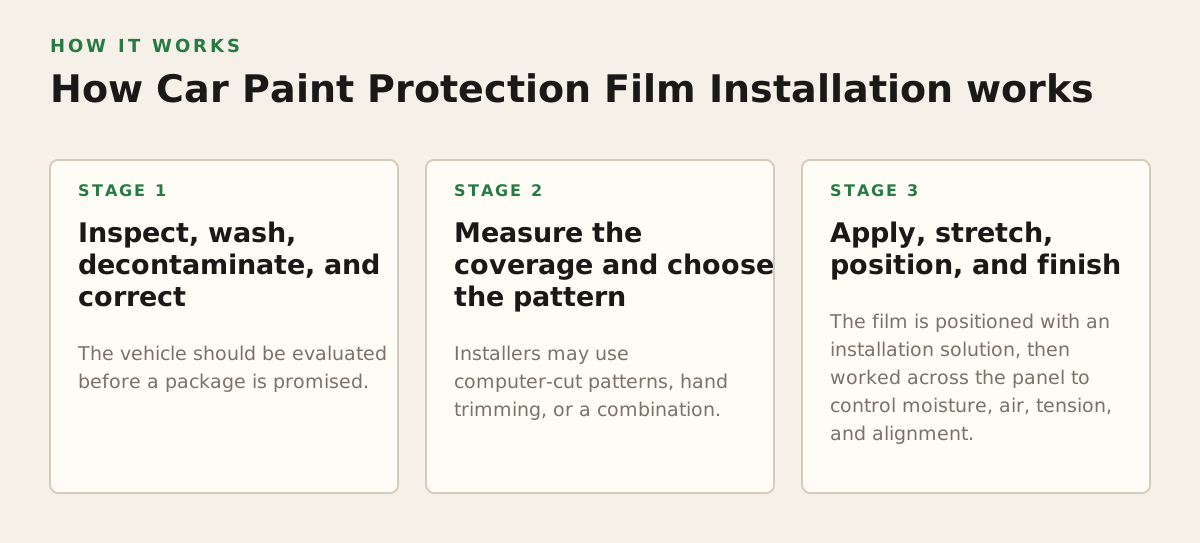
A quality result depends as much on preparation and pattern selection as on the film itself. The installer is managing three variables at once: the condition of the paint, the geometry of the panel, and the behavior of the adhesive and film during application.
1. Inspect, wash, decontaminate, and correct
The vehicle should be evaluated before a package is promised. Existing chips, scratches, oxidation, repainted panels, loose trim, and failing clearcoat can change what is practical. Film does not hide every defect; in some lighting, it can make an underlying edge or repair easier to notice.
Preparation commonly includes a careful wash, chemical and mechanical decontamination where appropriate, and paint correction if the owner wants defects removed before they are sealed beneath the film. Correction should happen before installation, because polishing after film is applied can damage or distort it. On a new vehicle, “new” does not automatically mean flawless: transport marks, dealership washing, and handling can still affect the starting surface.
2. Measure the coverage and choose the pattern
Installers may use computer-cut patterns, hand trimming, or a combination. A plotted pattern can provide repeatability and reduce unnecessary cutting near paint, while custom trimming can help with unusual parts or edge preferences. The choice is not simply “computer cut good, hand cut bad”; the important questions are how the pattern fits, where edges land, and whether the installer can adapt it without risking the paint.
Before work begins, confirm:
- Which panels are included and whether coverage stops at a visible edge.
- Whether emblems, badges, grilles, sensors, cameras, and trim must be removed.
- How seams, relief cuts, wheel arches, and complex curves will be handled.
- Whether the film will be wrapped around accessible edges or terminated on the face.
- How previously repaired or repainted panels will be treated.
3. Apply, stretch, position, and finish
The film is positioned with an installation solution, then worked across the panel to control moisture, air, tension, and alignment. Curves require careful stretching; excessive tension can contribute to edge pullback or lifting later. Tight corners and recessed shapes may need relief decisions rather than force.
After the film is set, the installer checks edges, trapped contamination, fingers, stretch marks, and alignment. Small moisture pockets may change as the film settles, but significant debris, wrinkles, or lifting should be documented and addressed according to the installer’s correction policy. The vehicle should not be judged only from several feet away; edges and transitions deserve close inspection under suitable lighting.
Manufacturers publish different care and warranty conditions. [3M’s automotive paint protection film information](https://www.3m.com/3M/en_US/p/d/b5005118001/) is one example of why the exact product matters: product families can have their own installation guidance, finish options, and limitations. A shop should identify the material rather than using “premium film” as the entire specification.
Where PPF breaks down or disappoints
Film is effective within its design envelope, but unrealistic expectations create most complaints. The following are not reasons to reject PPF; they are reasons to specify it honestly.
Impact severity and location still matter
A large rock can cut through film. A sharp object can puncture it. A collision can damage the panel and the film together. Film also cannot protect paint that was never covered. If a customer installs only a partial hood and later dislikes chips behind the coverage line, the problem may be package selection rather than film failure.
Edges are another vulnerability. Pressure washers held too close, aggressive towel work, automatic brushes, fuel spills left to dwell, and repeated contact with dirty trim can stress exposed edges. The [STEK USA paint protection film overview](https://www.stek-usa.com/paint-protection-film/) describes product features such as self-healing and hydrophobic behavior for its films, but those features do not eliminate the need for correct washing or protect against every chemical and impact.
Installation quality affects the visible result
Common warning signs include visible contamination under the film, inconsistent edge lines, excessive stretch distortion, lifting corners, trapped air that does not resolve, and cuts made too close to paint. Some edge visibility is unavoidable, especially on complex factory shapes, but the installer should explain it before work begins.
Repainted panels require special caution because adhesion and paint-cure conditions may differ from factory paint. A shop should ask about repairs rather than assuming every panel can be treated identically. If a panel has unstable clearcoat or poor prior refinishing, installing and later removing film may carry additional risk.
Maintenance remains part of the system
PPF should be washed with clean tools and suitable automotive products. Do not use a sharp scraper on the film, scrub a contaminated edge aggressively, or direct high-pressure water at a lifted corner. Remove insects, bird contamination, tree sap, and road film before they bake onto the surface.
- Illustrative starting policy: inspect the protected edges during every wash for lifting, contamination, or damage.
- Use a separate, clean wash mitt for lower panels where grit is heavier.
- Keep the pressure-washer tip away from edges and seams rather than treating a published distance as universal for every machine.
- Ask the installer before applying a coating, wax, solvent, or strong cleaner not listed in the film’s care instructions.
How practitioners should apply PPF to different vehicles
The best installation begins with a use profile, not a package name. A practitioner should ask where the vehicle travels, how it is stored, whether it has factory or repaired paint, how long the owner plans to keep it, and which imperfections would be most frustrating.
| Vehicle or use | Likely priority areas | Decision to resolve first |
|---|---|---|
| Commuter car or SUV | Bumper, hood, mirrors, front fenders | Partial versus full hood coverage |
| Truck or work vehicle | Lower front, rocker panels, door edges, bed-side contact zones | Road debris versus loading abrasion |
| Sports car | Splitter, lower bumper, full front, side skirts | Coverage around complex aerodynamic parts |
| Motorcycle or powersports vehicle | Tank, front fairing, leading plastics, rider-contact areas | Film flexibility and serviceability around removable panels |
| RV, bus, or commercial vehicle | Leading corners, lower panels, loading and contact zones | Downtime, access, and repeatable fleet specifications |
For dealerships and fleet managers
Commercial decisions are less about a single perfect finish and more about repeatability. Establish a written coverage map, approved products, inspection points, and a process for documenting pre-existing damage. A fleet policy might protect only the front impact zone on every vehicle, while specialty units receive additional rocker or loading-area coverage.
That approach makes handoffs easier. A dealership can identify what was installed before delivery. A fleet manager can compare damage in the same locations across vehicles. An operator can decide whether a replacement section is warranted without debating what “full coverage” meant on the original invoice.
For owners choosing an installer
Ask for a panel-by-panel scope, product name, warranty terms, preparation plan, and aftercare instructions. Look closely at completed work on comparable vehicles, especially bumpers, mirrors, wheel arches, and edges around sensors. A polished waiting room does not prove installation quality, and a low quote may omit paint correction, difficult panels, removal of trim, or meaningful edge coverage.
- Good sign: the installer records existing chips and explains what film can and cannot conceal.
- Good sign: the proposal identifies exact panels instead of promising vague “front-end protection.”
- Caution: the shop guarantees invisible results on every shape without discussing edges or repaired paint.
- Caution: the product is unnamed, the care sheet is unavailable, or warranty responsibility is unclear.
- Decision point: choose broader coverage when repaint avoidance matters more than minimizing visible transitions.
A practical recommendation for your next step
Start by photographing the vehicle in good light and listing the damage you most want to prevent: stone chips on a highway commute, scuffs on a work truck, gear contact on a motorcycle, or loading abrasion on a commercial unit. Then request a written PPF map that separates preparation, film coverage, edge treatment, aftercare, and warranty terms. If the paint already has defects, decide whether correction should happen before film rather than expecting the film to conceal them.
For Metro Detroit owners, dealerships, and fleet operators, Rite-Way Auto Reconditioning provides paint correction, detailing, ceramic coatings, Icon Rocklear paint protection, and protection services for a range of vehicles. Review the company’s paint protection film option when you are ready to match coverage to your vehicle’s actual use; the right installation is a specific protection plan, not simply the largest package name.