Paint protection film for new car ownership is a clear, replaceable urethane layer installed over vulnerable painted panels to reduce damage from road debris, bug acids, salt, and light surface abrasion. For a new vehicle in Greater Metro Detroit, the sensible approach is to protect the impact zones first—usually the front bumper, hood, fenders, mirrors, rocker panels, and door edges—then compare installers by film specification, paint preparation, coverage design, edge handling, warranty process, and maintenance instructions. PPF does not make paint damage-proof, but it can take the punishment that would otherwise reach the factory finish.
What paint protection film actually is
PPF is not a wax, polish, or sprayed coating. It is a transparent physical barrier, generally made from a flexible polyurethane film with an adhesive layer and a clear top surface. The film is cut and positioned over painted or appropriate finished surfaces so the vehicle’s original paint remains behind the sacrificial layer.
The word “clear” does not mean invisible under every condition. Film quality, paint condition, panel shape, lighting, installation cleanliness, and edge placement all affect what the finished job looks like. A good installation should preserve the appearance of a new car rather than draw attention to a border, trapped contamination, lifted edge, or misaligned pattern.
What PPF protects against
The useful mechanism is simple: an object or contaminant contacts the film before it contacts the paint. That can reduce the chance of chips and staining in high-exposure areas, although the result depends on impact energy, film thickness and construction, surface condition, and the quality of the installation. Manufacturers describe PPF as protection against common road hazards rather than a guarantee against every form of damage. For example, [3M describes its automotive paint protection film](https://www.3m.com/3M/en_US/post-factory-installation-US/paint-protection-film/) as a way to help protect painted surfaces from damage caused by road debris and environmental exposure.
That distinction matters in Metro Detroit. Gravel on a freeway, winter brine, construction dust, automatic-car-wash brushes, and repeated loading near a truck bed can create different problems. A film that helps with small stone impacts may still be cut by a sharp object, punctured by a heavy impact, stained by neglected contamination, or lifted when an edge was poorly prepared.
What PPF is not
- Not a substitute for washing: salt and road film still need to be removed from the surface and edges.
- Not a substitute for paint correction: film can preserve the condition underneath, but it does not automatically repair deep scratches, oxidation, or poor previous repairs.
- Not a complete vehicle shell: coverage is limited by the selected package, panel geometry, access, and the installer’s pattern strategy.
- Not permanent immunity: the film itself can eventually show wear and may need replacement in heavily exposed areas.
A ceramic coating can be used as a separate surface-treatment decision, but it should not be described as an impact barrier. A coating may change cleaning behavior and surface slickness; PPF supplies the sacrificial material that stands between a road hazard and the paint. Some owners use both, with film on impact zones and a compatible coating on exposed film and remaining paint after the installer confirms compatibility.
Why new vehicles benefit from a coverage decision early
New-car paint is easiest to protect before it accumulates chips, stains, dealership washing marks, or scratches from transport and delivery handling. Installing PPF early does not guarantee a flawless result, because the film follows the condition of the surface beneath it. It does, however, reduce the amount of correction or touch-up that may be needed before installation.
The best coverage is determined by use, not by the vehicle’s purchase price alone. A leased crossover driven mostly in town may need a different plan from a sports car driven on rural roads, a pickup used on gravel, or a fleet van that spends every day behind construction vehicles.
Match coverage to the vehicle’s exposure
- Daily commuter: prioritize the front bumper, leading hood, front fenders, mirror caps, and door edges.
- Highway sports car: consider broader hood and fender coverage, lower bumper areas, rocker panels, and rear luggage or loading contact points.
- Pickup truck: evaluate the front clip, rocker panels, bedside edges, door cups, and areas exposed when cargo is loaded.
- Motorcycle, dirt bike, or ATV: focus on tank sides, front-facing plastics, fork guards, number-plate areas, and contact points from boots or straps.
- Boat, jet ski, RV, bus, or commercial vehicle: map loading zones, rub points, front-facing surfaces, and repeated contact areas rather than assuming an ordinary passenger-car package fits.
These are illustrative coverage examples, not universal package rules. A site inspection should account for the actual bumper design, paint condition, trim, sensors, seams, emblems, body gaps, and how the vehicle is used. For dealership and fleet accounts, the decision also includes downtime, repeatability between vehicles, inspection standards, and whether the protected areas correspond to common damage claims.
Partial front versus expanded coverage
A partial-front package can be a rational starting point when budget or delivery timing limits the work. The trade-off is a visible transition line and unprotected paint outside the pattern. Expanded coverage reduces that boundary on the hood and fenders and protects more of the surfaces that collect debris, but it increases installation complexity and the amount of film that may eventually require replacement.
| Coverage approach | Useful when | Trade-off to discuss |
|---|---|---|
| Impact-zone package | The owner wants targeted protection for everyday road exposure | Paint outside the selected zones remains exposed |
| Expanded front coverage | The vehicle sees frequent highway, gravel, or performance driving | More material, more edge planning, and a larger installation scope |
| Custom high-contact coverage | A truck, powersports vehicle, boat, RV, or commercial unit has unusual wear points | The pattern must be designed around use rather than a standard passenger-car template |
How a professional PPF installation works
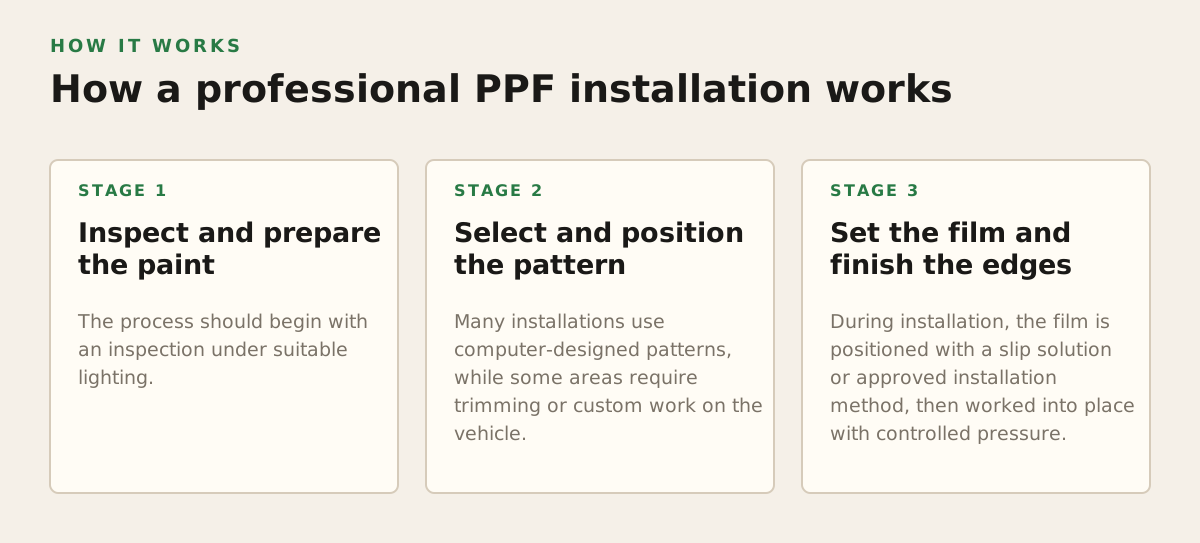
A durable result comes from a chain of decisions, not simply from placing film on a clean car. The installer must control the condition of the paint, the cleanliness of the work area, the pattern or template, the solution and squeegee technique, the edges, and the post-installation inspection.
1. Inspect and prepare the paint
The process should begin with an inspection under suitable lighting. The installer needs to identify chips, touch-up spots, repainted panels, sanding marks, scratches, contamination, failing trim, and areas where film should not be applied without a different plan. New does not always mean untouched: transport, dealer washing, accessories, and test drives can leave defects.
Preparation may include washing, chemical decontamination, mechanical decontamination where appropriate, polishing, or paint correction. The goal is not to polish automatically; it is to create a clean, stable surface without removing unnecessary clear coat. If a panel has a questionable repaint or weak edge, the installer should explain the risk before applying adhesive.
2. Select and position the pattern
Many installations use computer-designed patterns, while some areas require trimming or custom work on the vehicle. A pattern can improve consistency, but it does not eliminate judgment. The installer still has to account for compound curves, badges, parking sensors, seams, vents, body gaps, and whether an edge can be wrapped without creating tension.
Ask whether the proposed package covers the actual leading surfaces or merely follows a convenient template. The relevant question is not “How much film is included?” but “Which painted surfaces are exposed, and where will the film end?” A narrow strip can be appropriate for one panel and inadequate for another.
3. Set the film and finish the edges
During installation, the film is positioned with a slip solution or approved installation method, then worked into place with controlled pressure. Stretching can help conform the film, but excessive tension may create distortion, adhesive stress, or later edge movement. Heat may assist certain conforming steps, but it is not a cure for a badly selected pattern or contaminated surface.
Edge handling is a major quality checkpoint. Wrapped edges can reduce the visible transition and leave less exposed paint, but not every edge should be wrapped. Gaps, drainage paths, sensors, sharp corners, and removable trim can impose legitimate limits. A cleanly finished exposed edge is better than an overextended edge that lifts, traps dirt, or interferes with a panel.
Before delivery, the vehicle should be checked for lifting corners, fingers, bubbles, contamination, stretch marks, uneven alignment, and areas where the film touches trim improperly. Manufacturers publish different product and care requirements, so the installer’s written instructions should take precedence over generic internet advice. XPEL, for example, publishes product information for its [ULTIMATE PLUS paint protection film](https://www.xpel.com/products/paint-protection-film/ultimate-plus) and separate [product-care guidance](https://www.xpel.com/product-care); those documents illustrate why the exact film brand and product family should be identified in the paperwork.
Where PPF breaks down—and how to prevent avoidable problems
PPF failures usually have a visible cause: an impact exceeded the film’s ability to absorb it, contamination reached an edge, the film was installed over an unstable surface, maintenance was too aggressive, or expectations exceeded the selected coverage. A fair evaluation separates film damage from installation damage and from paint damage outside the protected area.
Impact, puncture, and abrasion
Film may reduce a chip without remaining visually perfect. A large stone, metal fragment, sharp cargo edge, or motorcycle strap can mark, cut, or puncture it. If the underlying paint remains intact, replacing the damaged film may restore the appearance. If the impact reaches the paint, PPF cannot reverse that damage.
On trucks and commercial equipment, repeated contact is often more important than a single highway event. Bed loading, tie-downs, trailer connections, brush, and equipment movement can abrade a surface in a pattern that requires a custom protection plan. Film should not be treated as permission to drag cargo across a panel.
Edges, contamination, and cleaning
Dirt collects where film meets a panel gap or trim. Pressure washing too close to a lifted edge can worsen the lift. Harsh chemicals, abrasive polishing, blades, and rough brushes can damage the film or its top surface. The practical maintenance routine is conservative:
- Rinse loose grit before washing, especially after a salted winter drive.
- Use a clean wash mitt and a vehicle-safe shampoo rather than scrubbing a dirty surface dry.
- Work from upper panels downward and avoid directing concentrated pressure at an edge.
- Remove bugs, bird contamination, and road salt promptly instead of allowing them to bake onto the film.
- Inspect edges periodically and report lifting early, before dirt works farther underneath.
Care instructions vary by product. A manufacturer’s document is more reliable than a general claim that every film can be polished, heated, coated, or cleaned with the same products. The 3M post-factory paint-protection-film resource, for example, identifies PPF as a product category with its own installation and ownership considerations; consult the documentation for the specific product installed rather than assuming that advice for another brand applies.
Also distinguish film-safe maintenance from paint correction. If the film has a damaged top layer, aggressive correction may make the appearance worse. The correct remedy may be cleaning, a manufacturer-approved treatment, or replacement of that section. An installer should explain which option applies instead of promising that every mark will disappear.
How to compare installers in Metro Detroit
Choosing an installer is a technical and communication decision. A low quote can reflect smaller coverage, less preparation, a different film, exposed edges, or fewer post-installation services. A higher quote is not automatically better either. Compare what will physically happen to the vehicle.
- Film identity: request the manufacturer, product family, finish, and written warranty terms.
- Coverage map: ask for the exact panels, transition locations, and any excluded trim or painted surfaces.
- Preparation plan: confirm how chips, scratches, contamination, and prior repairs will be handled.
- Edge strategy: ask which edges will be wrapped, which will remain exposed, and why.
- Pattern method: determine whether the work uses a vehicle-specific pattern, custom cutting, or a combination.
- Inspection and aftercare: ask how installation moisture, lifting, defects, and early concerns are addressed.
- Warranty process: learn who handles a claim, what is excluded, and whether the warranty covers film defects, labor, or both.
Warranty language deserves careful reading. It may address defects in the material for a stated period while excluding damage from collision, improper washing, chemicals, neglect, or installation outside approved procedures. Do not convert a warranty into a promise that the film will never yellow, stain, lift, scratch, or need replacement. The product documentation and written installer terms control.
For a new vehicle, schedule the inspection before applying film if possible. If paint correction is needed, decide whether it should happen before installation. For a dealership or fleet, use a written coverage sheet and inspection checklist so every unit receives the same decision process. That makes reconditioning easier to audit than relying on a verbal description such as “full front.”
Rite-Way Auto Reconditioning serves Greater Metro Detroit owners and commercial operators with detailing, paint correction, ceramic coatings, Icon Rocklear paint protection, window tinting, rustproofing, and undercoating. For a vehicle-specific recommendation, compare the exposed panels, preparation needs, edge plan, and maintenance requirements before selecting a film package. Owners can review the available ppf service and discuss whether targeted or expanded coverage fits the vehicle’s use through ppf. Rite-Way’s broader reconditioning options can also help coordinate paint preparation and related protection; start with Rite-Way Auto Reconditioning when you are ready to review the vehicle in person.